


The Amova Asset Management Global Investment Strategy Committee (GISC) convened on 30 September. The interpretation of apparently contradictory signals across asset classes was a key theme of its discussions. Central to this topic was the way resilient nominal growth, strong earnings and abundant financing—albeit all narrowly based—have underpinned the performance of risk assets even as inflation expectations, fiscal supply and term premiums keep long rates elevated. We therefore examined what factors were likely to keep the current equilibrium intact and, conversely, catalysts that could break it.
The global economy remains resilient, but the market regime is becoming more demanding: equities, credit and bonds may not be pricing the same contingent states. On one hand, bond yields may correct lower if the anticipated tightening cycle is front-loaded. Alternatively, for equities to offer a rational explanation for their lack of sensitivity to higher rates, it would be necessary for future earnings/cash flow growth to exceed the current pace to an extent that compensates adequately for a structurally higher cost of capital. Otherwise, equities may eventually need to reflect higher hurdle rates via lower valuations.
Key takeaways
- Healthy cash flows are commonly cited in an attempt to explain lofty valuations in the technology sector. However, if structurally higher interest rates are here to stay, they may have to accelerate further over the long term to justify the current valuations of these long-duration risk assets.
- The AI buildout continues to provide outsized support to US growth and earnings, but financing is moving beyond hyperscaler balance sheets into leases, project debt, private credit and long-duration issuance. Funding conditions for technology are thus becoming part of the macro outlook.
- Higher sovereign yields increasingly reflect more than central bank policy. Fiscal supply, term premium and competition for duration from corporate and AI-infrastructure financing are increasingly pronounced factors in bond pricing.
- Japan remains structurally resilient, but the policy challenges it faces have changed. The Bank of Japan (BOJ) may be pressured by the bond and currency markets to normalise at a faster pace, while the government is likely to remain under pressure to identify clear funding sources for its expansionary ambitions.
- China remains a two-speed economy. Weak household/property demand contrasts with external and strategic-sector strength; the near-term question is whether already-budgeted central-government and “Six Networks” spending catches up before year-end. Renminbi appreciation may be harnessed as a policy tool to ease the burden of domestic (and by so doing, global) imbalances.
- The central risk is not an obvious recession catalyst, but a break in the financing-and-confidence loop: AI monetization disappoints, credit weakens, inflation remains sticky, or sovereign supply pushes long rates high enough to challenge long-term valuation assumptions.
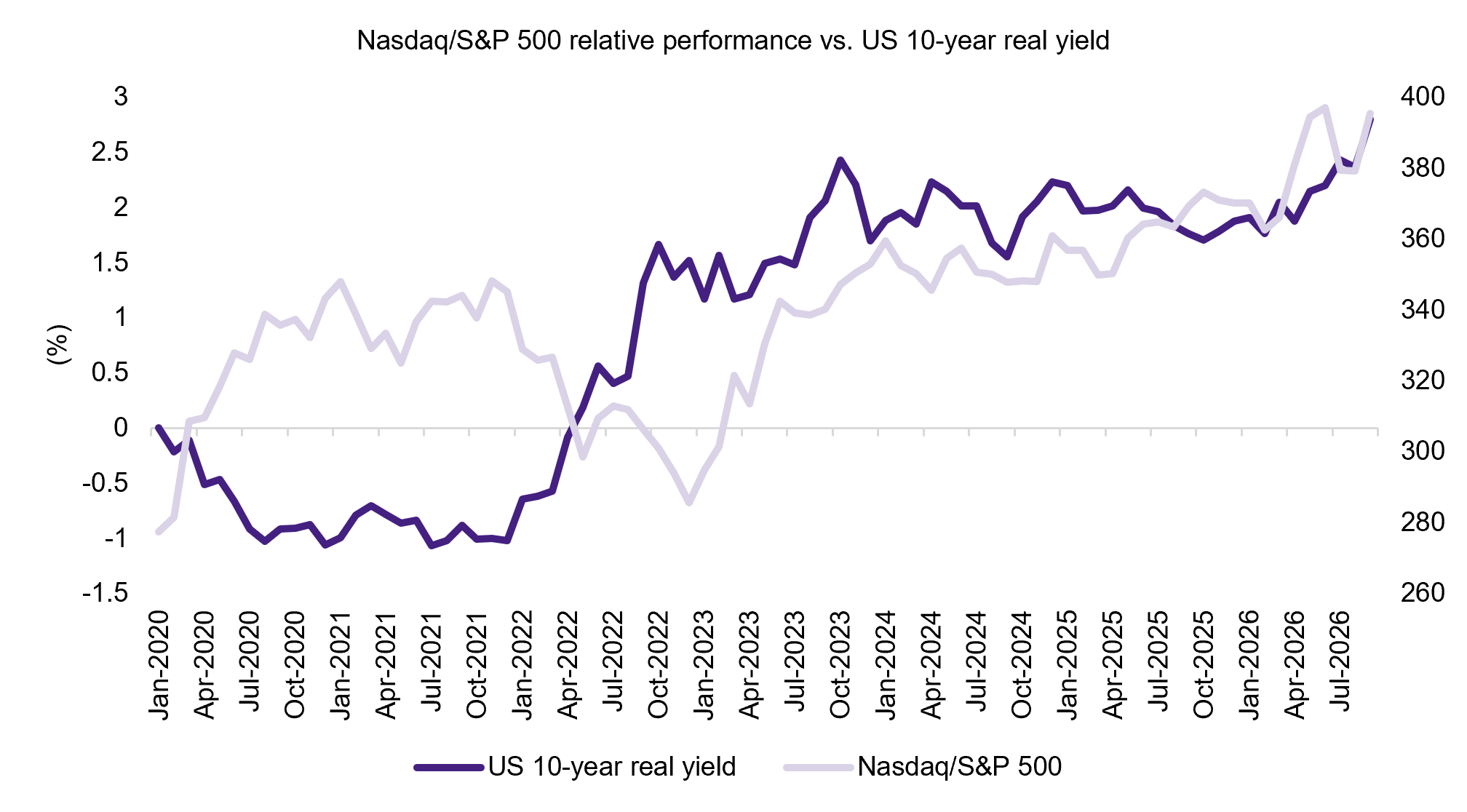
Chart 1: Technology leadership defies rising real yields
Source: Bloomberg
Global growth: contradictions can coexist for now
We begin with the most obvious contradictions priced into global markets at the time of writing. Long-term yields have risen sharply across developed country sovereign bond markets, yet equities and credit—risk assets that typically price off a base of risk-free interest rates—remain comparatively resilient. Some, but not all, Committee members foresee an adjustment in at least one market, to better reflect long-term fundamentals. The mechanism whereby current market conditions might reflect rational foresight remains tenuous.
While strong nominal growth and earnings can support equities and credit, inflation, fiscal deficits and term premiums can support higher bond yields, so long as the future corporate earnings are believed to offer adequate compensation for the inherent market risk and rising risk-free financing rates.
The Committee indeed foresees healthy corporate earnings and investment to underpin resilience in US growth over the coming year. This is not to say that uneven growth profiles are expected to imminently resolve, or that broad-based productivity will take hold during this period. However, the plentiful risk appetite that currently underpins risk assets—and indeed appears to be crowding out sovereign assets to some extent—may extend further, despite a weakening case for its continuation.
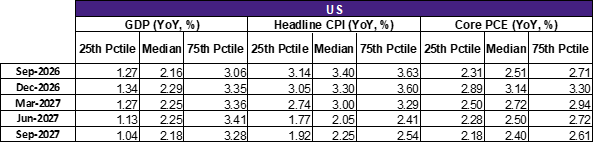
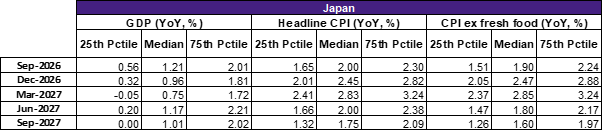
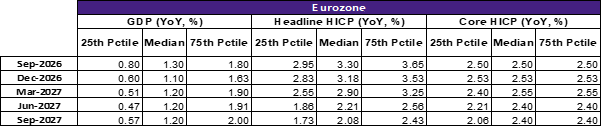
The Committee expects median US growth to remain above 2% year-on-year (YoY) for the coming year, with headline CPI and core PCE peaking at above 3% YoY. It expects all indicators to then retreat slowly but remain above the Federal Reserve (Fed)’s 2% target. Importantly, the inter-quartile range for both growth and inflation is wider further out on the horizon. The resilience of global growth continues to depend on robust US growth. The Committee continues to expect US growth, though narrowly-based, to set the pace for the rest of the world.
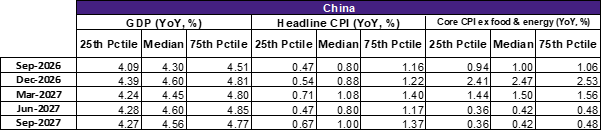
Japan is anticipated to show above-potential growth of around 1% YoY over the coming year; however, inflation may be difficult to contain amid elevated import prices and a weak yen. Inflation excluding fresh food is seen rebounding to the high 2% level by March 2027, but the final median is expected to fall below 2% by June and retreat to 1.6% by September as BOJ normalisation takes effect. Europe is expected to show modest but positive growth, with median GDP growth seen settling at around 1.1% to 1.3% YoY over the coming year, and with headline HICP moderating from the 3% to the 2% level thanks in part to the European Central Bank (ECB)’s proactive rate hikes. However, core Eurozone inflation is expected to remain stickier in the mid-2% range. Growth in China has been lacklustre to date, thanks in part to domestic authorities pivoting away from property-led growth and towards strategic sector investment including infrastructure. China’s GDP growth appears to have languished below 4.5% in Q3 2026. However, over coming quarters the government may launch incentives to boost spending so that growth can be brought back above 4.5% for the full year. Headline inflation is expected to remain low at around 1% YoY, with core CPI possibly fluctuating as the lagged impacts of imported price rises are passed through.
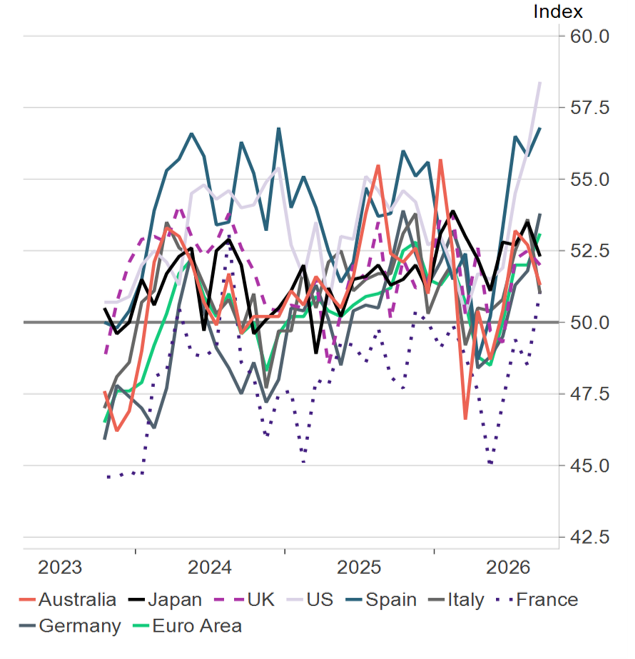
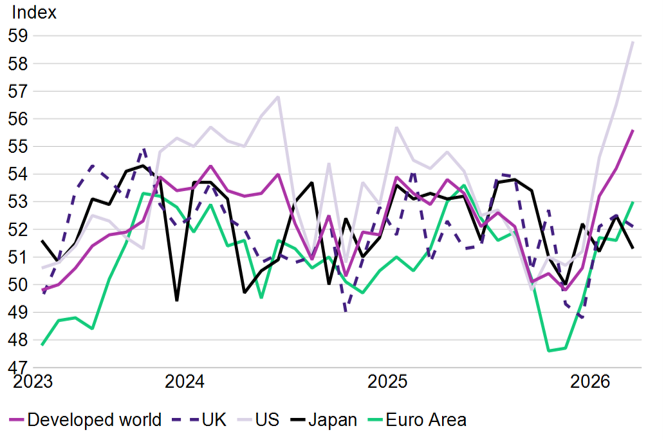
Chart 2: PMIs are strongly expansionary again
Source: Amova Asset Management, S&P Global, Macrobond
Global bonds, rates and credit: carry meets a supply problem
The recent global sell-off in long-term bonds has been too large to explain by moves in oil prices alone. There may be an interplay of inflation expectations, resilient growth, concerns about fiscal credibility and rising term premiums, new fiscal supply (and competition from private-sector credit) and the market’s capacity to absorb duration. These factors may reinforce each other and at other times come into conflict.
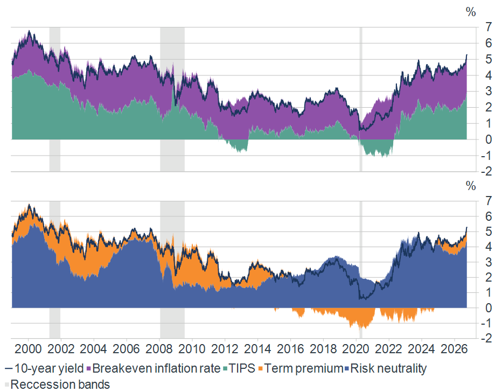
Chart 3: US Treasuries pricing higher-for-longer (top) and Japan re-rating in favour of higher-for-longer (bottom)
Source: Bloomberg, Macrobond.
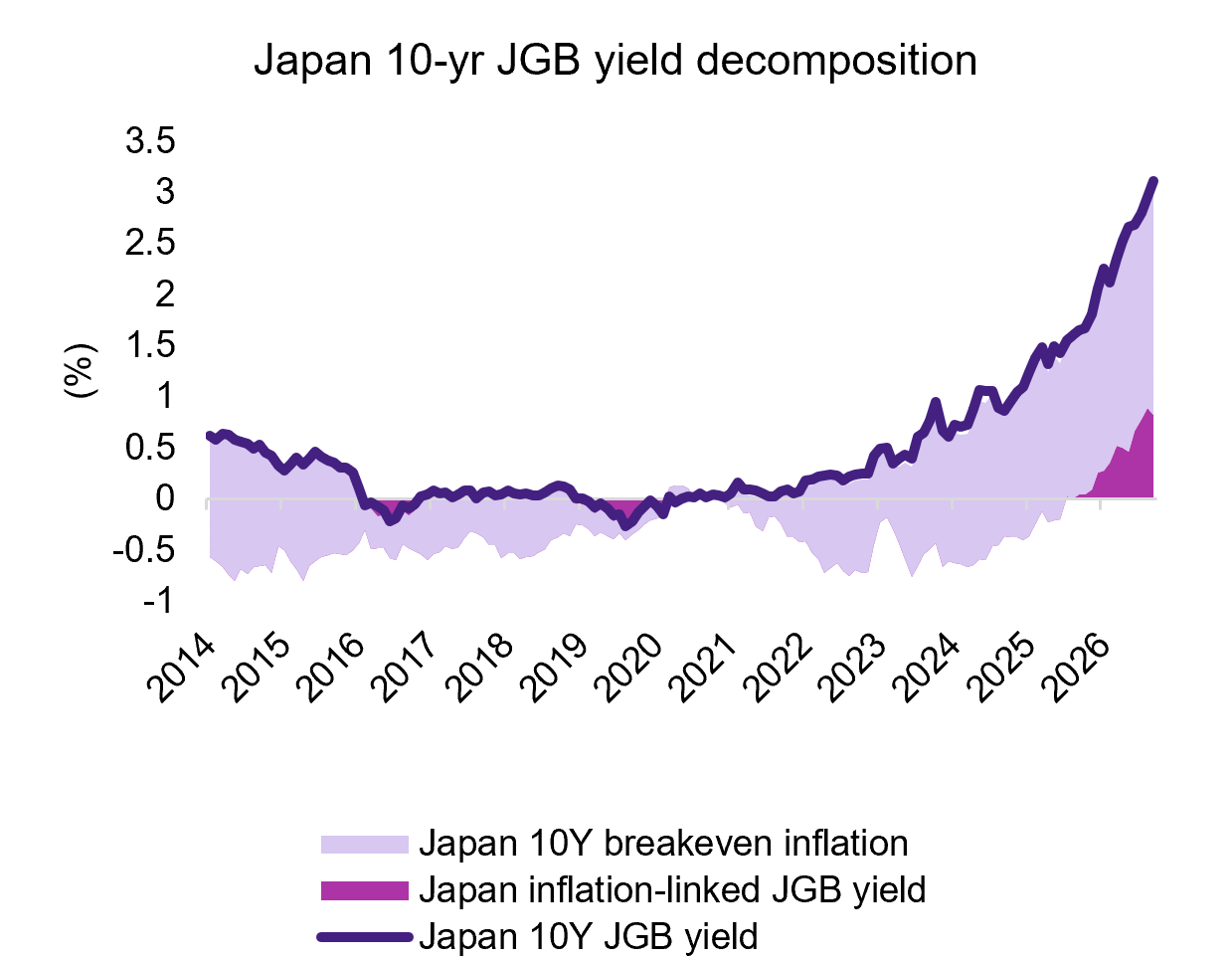
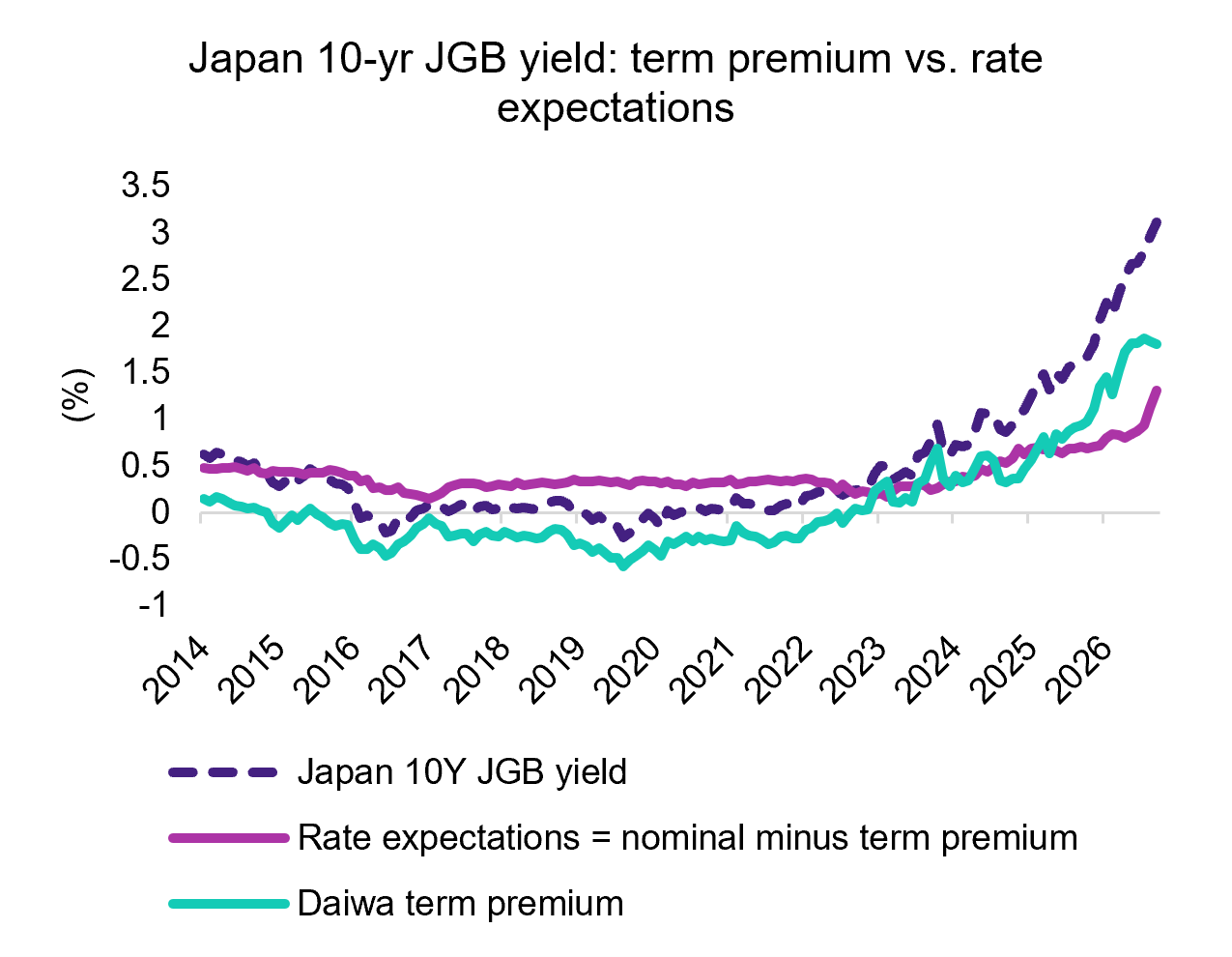
Chart 4: Japan re-rating in favour of higher-for-longer
Source: Bloomberg, Macrobond
Note: Japan’s breakeven inflation accounts for much of the 10-year JGB yield decomposition, but the proportion of real yield has been rising. Meanwhile, the decomposition into term premium and expected rates sends a more striking message: the market is re-rating the BOJ’s normalisation path.
Higher-for-longer is increasingly being priced into the expected rate path, rather than through a further rise in the term premium.
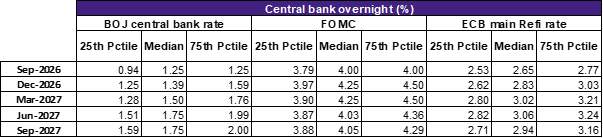
In the short end of global yield curves, it is clear that bond investors anticipate higher-for-longer policy rates. Likewise, the GISC median forecast calls for the BOJ to raise rates from 1.25% to 1.75% over the coming year, with the pace of tightening quickening from semi-annual to quarterly hikes. The median outlook also includes an additional Fed rate hike by March 2027 and tightening by the ECB to 3% by mid-2027, though these increases could be reversed if disinflationary pressures return.
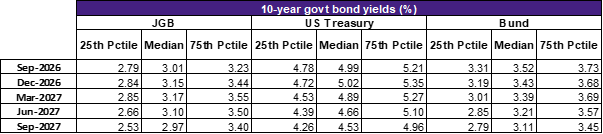
The long-end of sovereign yield curves is expected to remain under short-term pressure. The 10-year Japanese government bond (JGB) yield is seen remaining above 3% until September 2027, and the 10-year US Treasury (UST) yield is expected to peak in the low to mid-5% level, before eventually retreating below the threshold by September 2027 as rates are seen declining across the curve. The Committee believes the long-term German Bund yield may have already peaked, expecting it to settle in the low to mid-3% range by September 2027. Overall, the long end remains the uncomfortable part of the global yield curve. This is because large fiscal deficits and heavy sovereign issuance at times clash with increasing long-duration corporate and data centre funding needs.
The widening French sovereign spread meanwhile demonstrates that fiscal credibility concerns are no longer confined to small peripheral issuers, raising concerns over systemic risk and questions about the need for an eventual ECB backstop. In the current environment, global pressures may keep European sovereign curves under pressure even if growth remains mediocre.
Recent analysis from the Brookings Institution[1] measures the implications of aggressive data centre and AI infrastructure buildout between 2025 and 2032, projecting roughly US dollar (USD) 10 trillion of investment in the event 182.8 GW of new capacity is built by end-2032, followed by completion of an additional 117.2 GW only after 2032, and a substantial overhang (around 40% of the gross post-2024 pipeline) of partially realised, unrealised or downsized infrastructure over the projection period. Not included in this figure, though with potential overlaps, are future lease and purchase commitments among the four major hyperscalers, for which the paper cites a recent Wall Street Journal tally of around USD 2.4 trillion.
The possible implications for the credit market are significant. All-in yields remain attractive and continue to respond to supply and demand conditions. For example, spreads can tighten in response to “monster issuance” rumours that do not materialise. At the same time, rapid shifts in sentiment have also been observed, with heavily oversubscribed deals rapidly giving way to secondary market weakness when issuers’ ability to meet future liabilities has been thrown into question.[2] As a result, security selection is likely to matter greatly in the credit market in this phase of the cycle. There is active competition for long-duration capacity on investor balance sheets, and the GISC cautions that private AI financing may be adding to the term-premium pressure already created by government supply.
Foreign exchange and commodities: the dollar still has a US-growth anchor
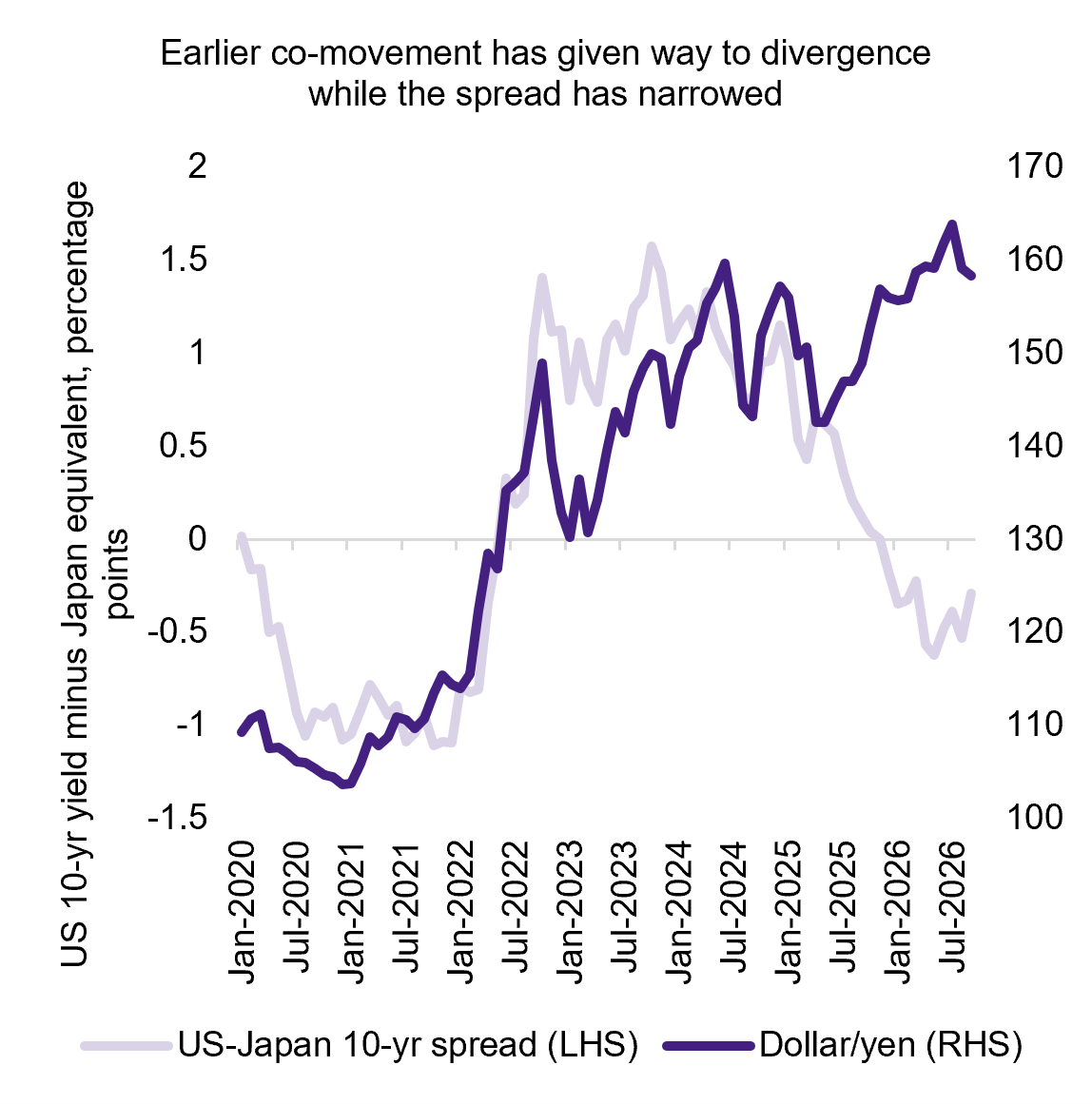
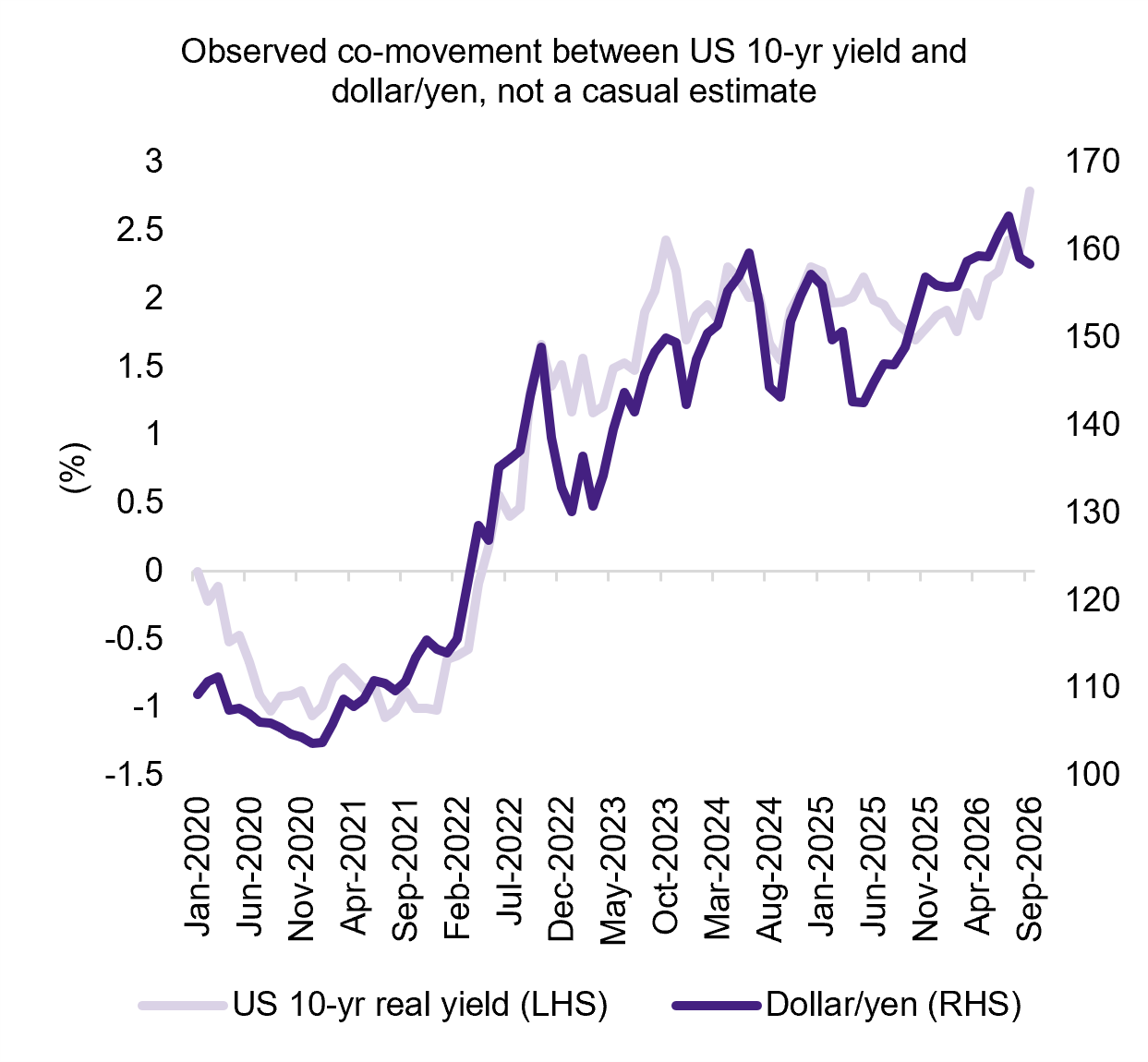
Short-rate differentials alone do not explain the foreign exchange market; nor do movements in long-end yield differentials. Continued US growth and support for US risk assets in particular appear to be helping the US dollar even as relative-rate signals become less dominant. Beyond this, we previously observed the decoupling of dollar/yen from relative yield differentials in favour of US yields alone (nominal or real; see The yen: carrying the weight of the world’s risk tolerance). We argued that the yen may be acting as a “last bastion” of cheap money that may help sustain investor demand for US risk assets despite the associated exchange rate risk. Thus, it is necessary to treat the currency pair as a joint function of US yields, global risk tolerance, Japanese policy credibility and intervention signalling, and not simply as a product of a US-Japan rate differential.
Chart 5: Dollar/yen has decoupled from the US-Japan 10-year spread (left); it has also traded like a US yield story (right)
Source: Bloomberg
BOJ credibility remains pivotal not only for longer-duration JGBs but also for the yen. The market has now factored in a faster pace of hikes from the BOJ. As a consequence, both JGBs and the yen could come under intense selling pressure if the BOJ is perceived as “behind the curve”.
The Committee expects dollar/yen to be range-bound in the near term and sees a gradual decline in the pair from a range centred on around 158 as of December 2026, to around 151 by September 2027, with possible interim incursions below 150. Euro/yen, likewise, is seen moving from the mid-180s level to below 180 within the year. Euro/dollar is foreseen strengthening modestly over the same period, while sterling and the Australian dollar are expected to remain essentially flat against the greenback.
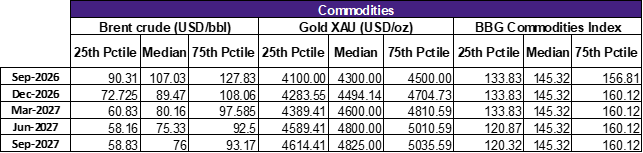
The GISC sees oil prices remaining volatile but gradually normalising over the coming year, with prices foreseen in the high USD 80 per barrel area around the end of 2026 and coming back to the mid-70s by September 2027. The potential for some scaling back of hostilities between the US and Iran and slower growth as the FOMC hikes rates were cited as potential factors. Gold has the potential to remain well-supported as central banks continue to diversify away from the dollar. Copper may remain in demand alongside the structural AI, electricity grid and infrastructure themes, but the metal may also be vulnerable to any softening in economic demand or specific demand for AI-related building.
US: earnings remain too strong to ignore, but could be tested by financing
The ongoing AI investment boom has not only become a substantial feature of firm-specific investment and funding, but also an overpowering economic driver of global proportions. Despite the inherent contradictions in asset markets (e.g., higher sovereign rates co-existing with lofty equity valuations and ultra-tight credit spreads), the Committee saw a growing need to contextualise equity markets against a potentially changeable macro backdrop.
Chart 6: US equity compensation relative to Treasuries has compressed
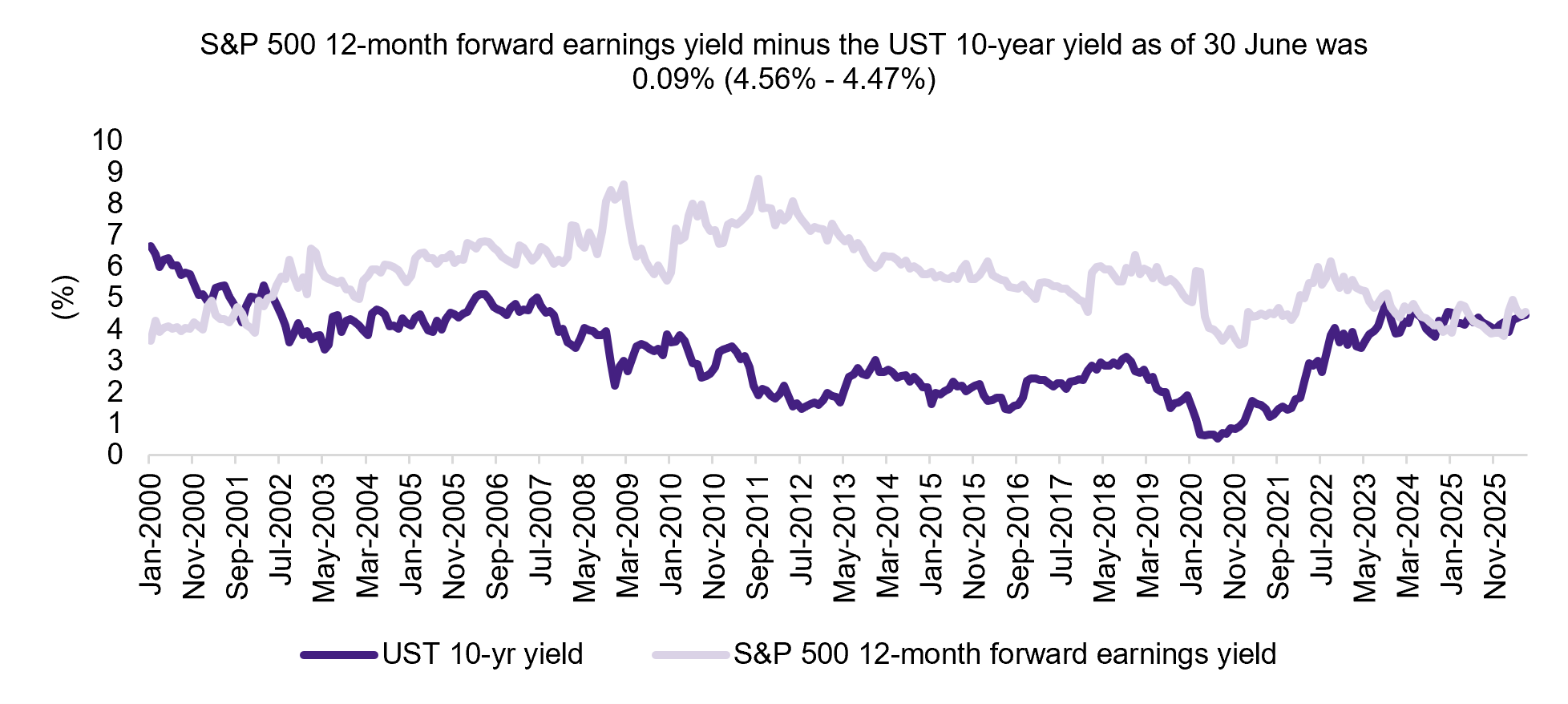
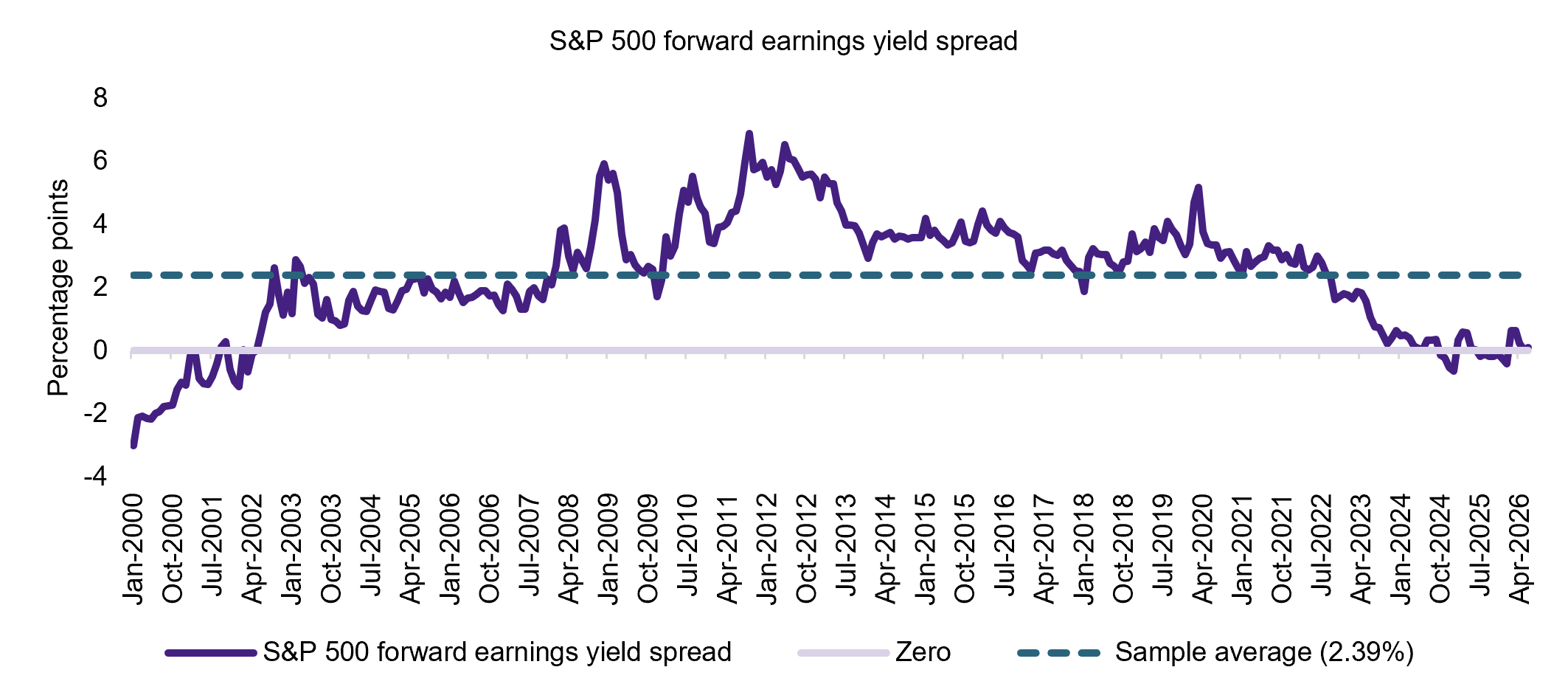
Source: Bloomberg (12-month consensus forward EPS/S&P 500 minus UST 10-year yield)
As we pointed out above, resilient US growth remains critical to the persistence of current market conditions, with AI/data centre investment contributing materially to nominal activity and earnings. At the same time, tensions coexist in the current environment. Valuations are not cheap in any absolute sense, yet earnings strength and periodic de-rating could keep equities supported in the near-term.
More broadly, equity valuations appear to have outpaced measurable aggregate productivity, of which infrastructure spending alone is not an effective proxy. For example, enterprise LLM revenue remains much more modest than the overall capex footprint, and production-side gains have not yet become broadly visible. Nevertheless, large-scale investment on its own is unlikely to end the capex cycle. A turning point might come when returns no longer justify funding or when financing becomes troublesome for large spenders.
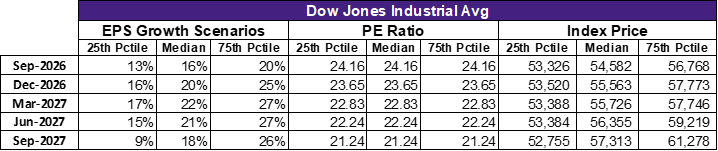
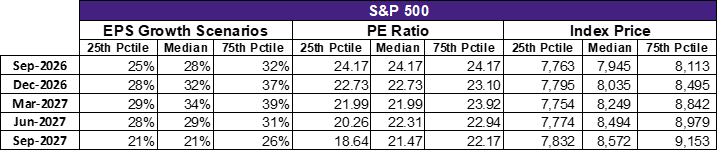
The GISC foresees strong ongoing earnings for the S&P 500, reflecting the ongoing investment boom, with YoY earnings growth of above 20%. According to GISC projections, earnings growth by the Dow Jones Industrial Average will be more modest but still within a comfortable double-digit range. Valuations, however, are expected to compress modestly for both indices over the coming year. One key consideration is whether the Fed’s tightening path is front-loaded as expected. If the Fed tightens less than anticipated while financial conditions remain accommodative, this could provide a buying catalyst for risk assets. However, alternative scenarios have become more likely and are discussed in the “Principal risks” section on page 11.
Chart 7: S&P 500 vs. US small caps, MSCI Japan, Europe and China (2020 = 100)
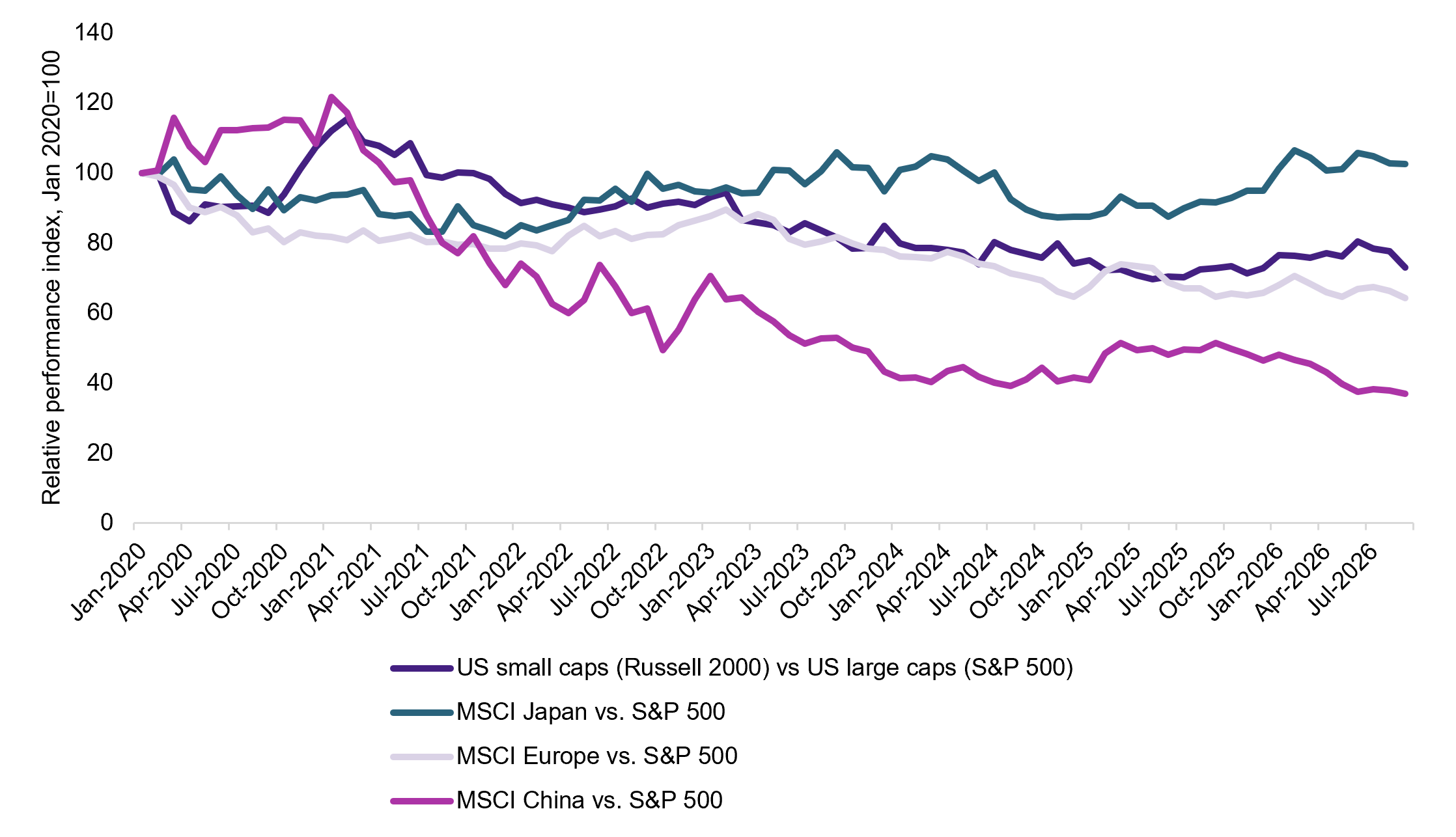
Source: Bloomberg
Japan: faster normalisation, broader earnings, fiscal credibility test
Japan continues to look resilient compared not only to the Eurozone but also to the US, mostly because of a mix of lower equity market and earnings concentration, positive real-wage dynamics and gradual structural recovery from its deflationary “lost decades”. A faster pace of BOJ hikes (described in the rates section above) may assuage worries that the central bank is behind the curve and help cap long-end JGB yields. Meanwhile, yen weakness may be contributing to the relative attractiveness of Japan as an investment destination in the eyes of domestic companies, who have shown early signals of re-rating their relative investment intentions.
Chart 8: Japanese firms' overseas sales and investment shares, June 2026
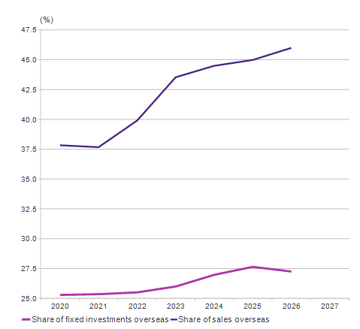
Source: Macrobond
The Takaichi administration and its “17-sector” growth strategy raise a separate credibility question: can Japan proceed with fiscal expansion while maintaining its commitment to secure funding sources? The constraint may limit certain expansionary aspirations which may have been perceived as a tailwind to equities. That said, fiscal credibility may help preserve market confidence. Meanwhile, as we have pointed out many times before, the government may go further with coordination policies that design incentives to put to work the private sector’s massive cash balances, which are estimated to exceed Japanese yen (JPY) 350 trillion among corporates and over JPY1.1 quadrillion in household holdings. This may result in proactive private sector, not fiscal, spending while helping fiscal policy remain responsible.
Assuming fiscal credibility remains intact, we foresee conditions remaining structurally supportive for equities, built on broader sector participation, governance, wages and investment rather than simply yen weakness or profligate fiscal expenditure.
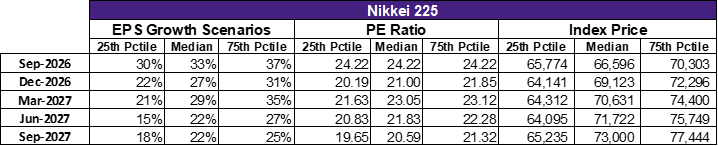
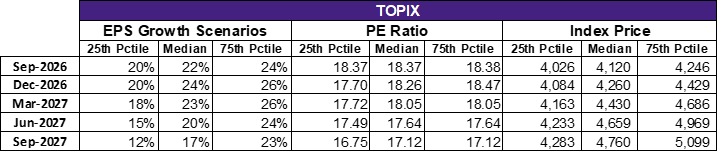
The Committee foresees EPS growth as likely to remain robust for the Nikkei 225 (comfortably above 20% YoY over the year to September 2027), with P/E compressing to nearer 20x. For the TOPIX, the GISC sees the possibility of EPS growth moderating but still maintaining a healthy double-digit level, with valuation (P/E) compressing modestly to the 17x-level.
Europe: fiscal credibility and possible knock-on impact to equities
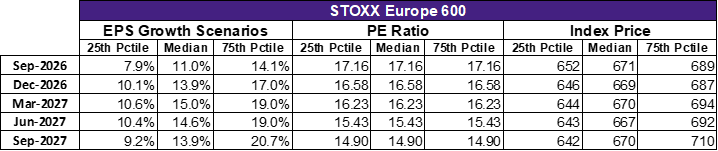
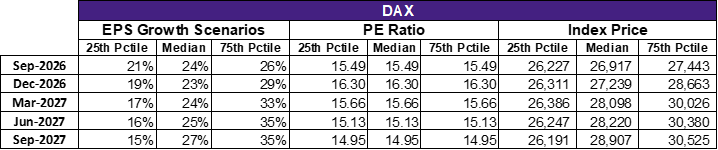
The Committee foresees Europe remaining a low-growth, sticky-inflation market over the forthcoming year rather than emerging as a global growth leader. Given the ongoing competition for long-duration space on global investor balance sheets, the case for European diversification may be weaker if neither growth nor comparative fiscal dynamics remain strong diversification arguments. Stoxx EPS growth is expected to improve from the low double-digits, but the Committee foresees that P/E declines may offset such improvement to keep the index mostly flat over the coming year. However, the DAX could potentially buck the trend and beat valuation declines with stronger earnings growth.
China: policy catch-up, not a demand-side “big bang”
Household deleveraging, property weakness and soft retail activity continue to coexist with strength in strategic exports, manufacturing and technology-linked investment. Recent housing market reforms send mixed signals. Reforms to the commercial housing sales system have tightened conditions and supervision of projects using presales (implying that developers will need to fund a larger proportion of home completions from existing capital).[3] While this development could counter-intuitively speed up already planned capital expenditure (as firms wish to complete projects more quickly to achieve profitability more rapidly), it may also dampen overall capex by developers.
At the same time, China also unveiled measures to support housing demand, with subsidies of 1% applicable to loans up to Chinese yuan (CNY) 1 million on homes valued at CNY 1.5 million or less.[4] The net impact of these policies remains uncertain. More apparent is China’s structural shift away from property-led growth towards strategic and transition-related investment. In this context, supply-side infrastructure (which occupies a prime position within the “Six Networks”) remains an important channel for investment. These include water, power grids, computing power, next-generation communications, urban underground pipelines and logistics.
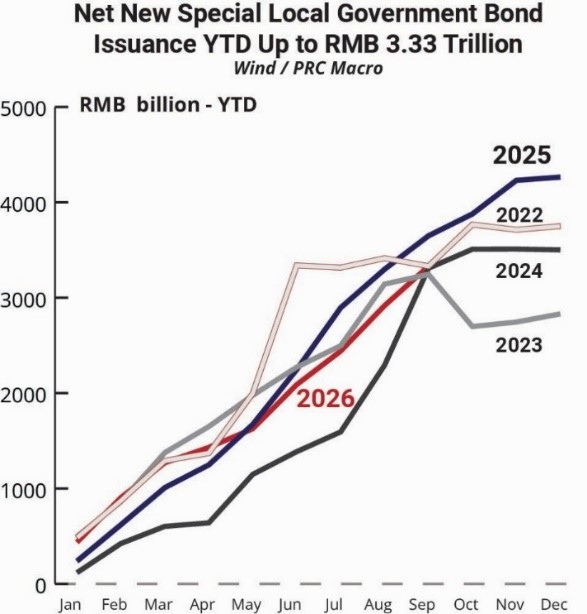
Fiscal spending could accelerate in Q4 as policymakers seek to offset the slowdown in investment seen earlier in the year and ensure full-year growth targets are met. However, the Committee expects any fiscal acceleration in the final quarter to reflect execution of already-budgeted spending, for which much debt issuance has already taken place, rather than a new expansion in the overall fiscal stance.
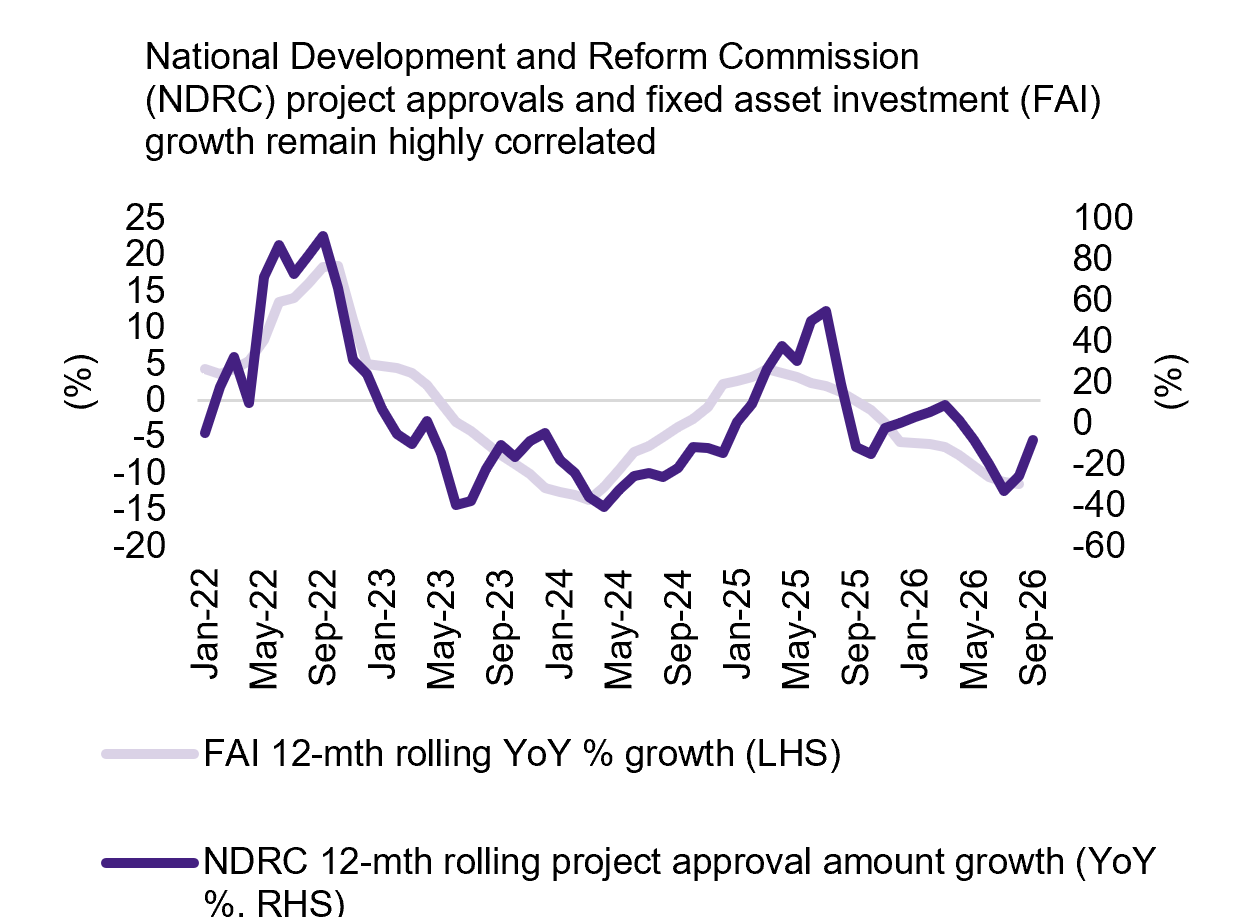
Supporting this outlook, project approvals by China’s National Development and Reform Commission (NDRC) have accelerated; these historically correlate closely with fixed asset investment and infrastructure activity. In addition, just under CNY 1 trillion of local government special bonds remains available for issuance under the existing quota, while the possibility of additional approvals before year-end could provide further support in Q4.
The key question, however, remains whether approvals are followed by bank lending and ultimately lead to actual cash flow, including policy-bank funding to facilitate SOE repayment of local government arrears. Even so, the Committee does not anticipate a Q4 acceleration to alter China’s two-speed economy.
While the GISC anticipates GDP growth could rise above 4.5% YoY in Q4, growth is expected to fluctuate in the mid-4% range over the coming year. Inflation is also expected to remain uneven, with headline CPI breaking above 1%, while CPI ex food and energy may fall back below 0.5% YoY during the course of the year.
Onshore equities have meanwhile seen larger relative inflows than MSCI China. The CSI500 is less internet- and exporter-heavy and may help investors diversify their offshore-China exposure. Renminbi strength has also run ahead of some expectations, a trend that may continue in the longer term. Appreciation can help cushion imported price pressures domestically while raising the foreign-currency price of Chinese exports, making the currency another potential channel through which China’s structural shift could affect global inflation and external imbalances.
Chart 9: China project approvals lead investment growth, local government bond issuance remains elevated
Source: PRC Macro
Principal risks to the outlook: where the contradictions could break
Key risks to the outlook flagged by the GISC are centred on areas where the market’s supporting assumptions may prove unsustainable. These include the following:
- An AI funding or monetization shock, where capex commitments continue to grow faster than enterprise monetisation. In such a scenario, a funding pullback may also transmit simultaneously to equities, credit and long-term yields. Rough probability for this risk was perceived as 15-33%, with the impact likely to be medium to high. This was the broadest recurring concern among GISC participants.
- A long-term yield or fiscal supply shock. Sovereign issuance plus private duration supply may lift term premia enough to challenge hurdle rates and thus valuations. The perceived probability was 10-20%, with high impact, and overlapped somewhat with inflationary and AI funding scenarios.
- Inflation propagation. Even if crude prices normalise, refining bottlenecks, diesel, wages or supply constraints could keep underlying inflation too persistent for the currently priced policy path, requiring still higher adjustments. This risk was assigned a 20-40% probability with medium-to-high impact, with repricing of long-term yields and energy-driven inflation seen as a potential catalyst.
- Geopolitical discontinuity risk. Renewed Middle East escalation, a change in US engagement or other political events could disrupt the benign assumption that markets can mostly look through geopolitical risks. This risk overlapped with inflationary risks, particularly if higher energy prices become embedded in inflation expectations. Participants assigned a probability of 20-25% to a moderate disruption and 5% to extreme geopolitical discontinuity, with medium to high impact.
- Japan-specific policy credibility: Though Japan is not alone in experiencing challenges to both fiscal and monetary credibility, its positioning earlier in the normalisation cycle may give rise to numerous challenges as the carry trade risks morphing into Japan-selling. The probability of heightened credibility shocks was estimated at 20-25%, with the impact medium-to-high, and remains a focus across asset classes.
- China execution risk: the Committee’s main scenario is China executing its full-year plan and ramping up spending in Q4, but it also allows for the risk of fiscal support failing to translate into expenditure quickly enough to offset ongoing weakness in the property and household sectors. No specific probability or impact was assigned to this risk.
Quality: a turnabout on the “AI Mississippi Cruise”?
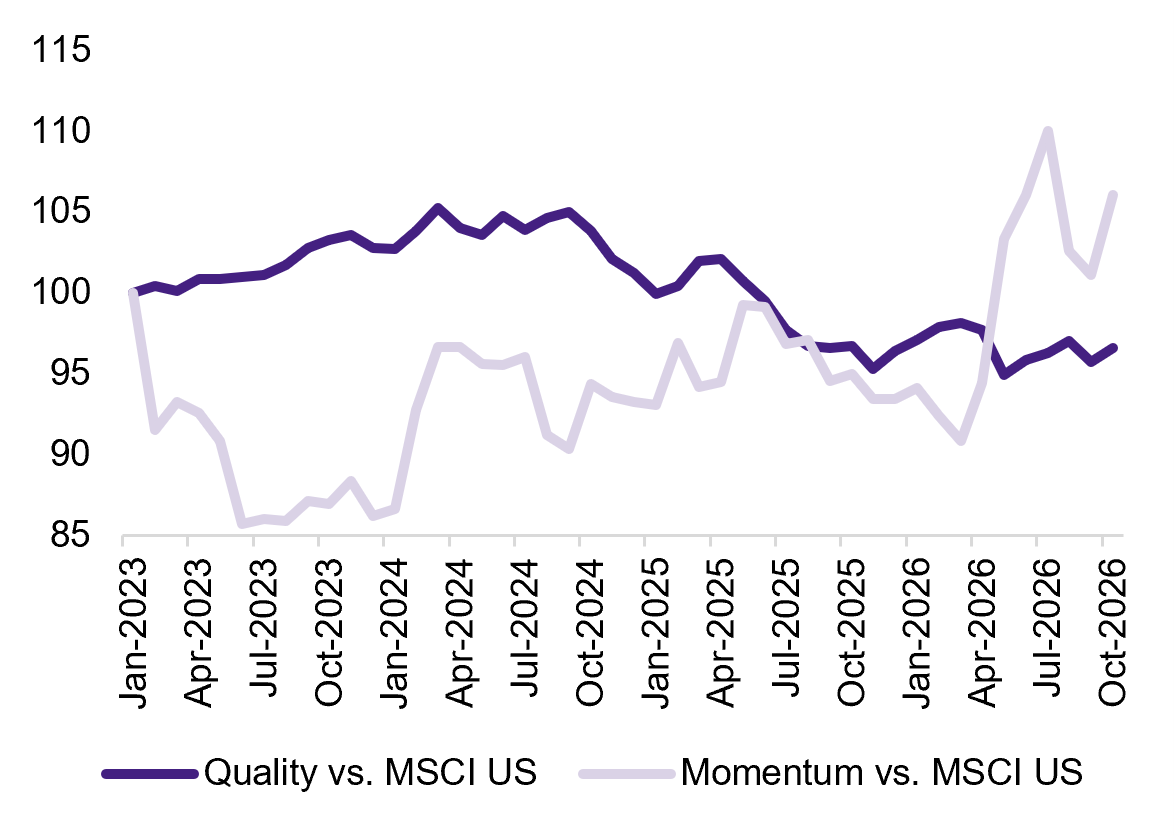
A recent Financial Times article[5] lamented the recent underperformance of quality firms (competitive firms with high, steady profitability and strong balance sheets), in favour of trend-followers, a pattern that may be observed in the relative performance of quality and momentum factors versus the MSCI US (see Chart 10).
Chart 10: Quality and momentum relative to MSCI US (rebased to 100 in January 2023)
Source: Bloomberg, Amova AM
Concurrently, there is insufficient evidence that AI is already delivering the productivity growth that innovation booms tend to offer, with some lag to the actual investment.[6] As with Solow’s observation in 1987, we do not yet have persuasive evidence that AI has ushered in a new US productivity regime.[7] In the same vein, we also explored the lack of contribution from investment-specific technology (proxied by relative prices) in the Q3 GISC Outlook.

Source: Shutterstock
Of course, it is much easier to explain why something is happening than why it is not. However, economist, data scientist and machine-learning researcher Hannes Mueller offers a plausible hypothesis: the option value of waiting under unusually rapid capital obsolescence. Mueller alludes to de Tocqueville’s 1831 observation that Mississippi steamboats were built cheaply because technology was improving so quickly that a durable boat risked becoming obsolete before it wore out.[8] The AI analogue is that firms may rationally hesitate to redesign entire organisations around today’s models if the next generation is expected to be substantially better.
Meanwhile, dips in measured productivity during the build-out phase of innovation booms (the “J-curve”) have been observed before, giving rise to the idea that not only adoption, but complementary investment in workflows, business models and human capital must occur to create a broader base for productivity on a macroeconomic level. Mueller’s point is that rapid obsolescence may delay the complementary investment itself.
Of course, one counterargument is that AI productivity is being mismeasured because conventional statistics inadequately capture hedonics (quality adjustments); advocates of this argument often point to falling token/model prices. But these do not necessarily coincide with a comparable fall in the economic user cost of AI capital. Some quality adjustments may make frontier capability appear ever cheaper, yet rapid obsolescence, migration and reintegration costs shorten the economic life of what firms buy today. Frontier capability can therefore become cheaper even as model-specific investment remains expensive.
The hypothesis remains to be demonstrated with time, as economic and market developments unfold. However, if indeed costs associated with obsolescence are not adequately priced into frontier technologies in the same way their potential capabilities are, quality may therefore be suffering too aggressive a discount on the assumption that AI will render existing capabilities obsolete. Instead, if AI itself becomes increasingly commoditised, rents may start to accrue disproportionately to the scarce complements required to use it well. Solid business models, processes and human capital may be necessary to harness the potential of newly innovated capital, whereupon we may be able to speak of “diffusion” with greater confidence. Of course, factor exposure alone is probably not enough to select winners. However, where “quality” also coincides with organisational capital or AI implementation capability, diffusion beneficiaries may yet emerge.
Conclusion: equilibrium persistence is state-contingent, while tail risks are rising
Strong earnings and ongoing benign credit conditions on the one hand, and the accelerated adjustment in sovereign long-term yields and heightened signals of inflation propagation on the other, are seemingly contradictory features of current markets. The central macroeconomic condition allowing the current balance to persist is a resilient nominal-growth regime, which continues to support earnings and financing conditions.
What has changed is the scale of financing required to sustain that environment. AI investment, sovereign deficits and infrastructure needs are all simultaneously competing for capital, raising the risk of funding constraints emerging. Against this backdrop, the Committee remains focused on identifying early signs of a turning point. Key indicators include funding conditions (both overall and firm- or sector-specific), sovereign term premiums, inflation propagation and policy credibility.
Appendix: GISC outlook guidance
Global macro indicators
Central bank rates, forex, fixed income and commodities

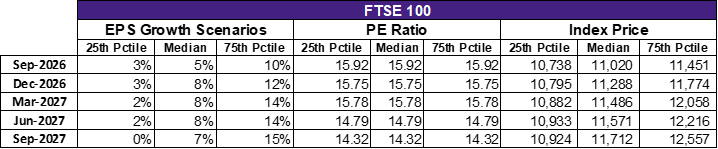
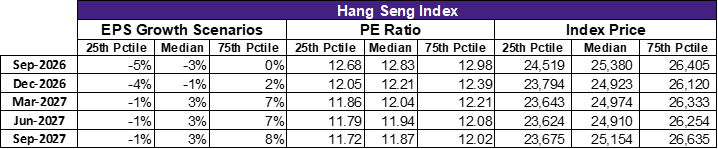
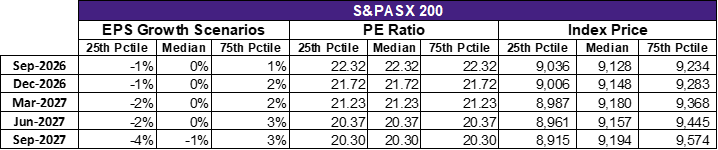
Equities
References
[1] Brookings — “Financing the AI Buildout” by Stijn Van Nieuwerburgh
[2] The Coreweave example illustrates how strong appetite for AI-related credit can coexist with rapid changes in investor tolerance and required compensation as questions around leverage, contract duration and future liabilities emerge.
[3] China moves to improve commercial housing sales system | english.scio.gov.cn
[4] China unveils mortgage subsidies to boost economy
[5] Financial Times, “What’s a quality investor to do?”, 24 September 2026
[6] For example, Lakshman Achuthan, the COO and founder of the Economic Cycle Research Institute, expresses scepticism about whether “AI Everywhere” offered productivity growth that might keep inflation contained; Source: Bloomberg, “Inflation Pressures Remain in ‘Cyclical Upswing,’ Says Lakshman Achuthan,” 17 September 2026.
[7] Solow, R. M. (1987), “We’d Better Watch Out,” New York Times Book Review, 12 July 1987
[8] Mueller, H. (2026), “Are we on an AI Mississippi cruise?”, LinkedIn.