

Surprise victory

Source: Shutterstock
On 4 October, Sanae Takaichi was elected to be the first female president of the ruling Liberal Democratic Party (LDP). This followed the LDP’s two defeats in the national elections over the past 12 months under the previous leadership. This was considered a ‘change of government’ within the LDP (from the left to the right) and the initial reaction in the market was higher stock prices, depreciation of the Japanese yen and higher government bond yields, the so called Takaichi trade, with rising expectations of higher government spending.
However, forming a coalition to achieve the majority votes in the parliament required to become the prime minister became a struggle after the junior coalition partner Komeito left the coalition amid differing views on political funding and other things. (At the time of writing, Takaichi has been elected the first female prime minister after the LDP formally signed a coalition agreement with the Japan Innovation Party, a centre-right, reformist political party known for its roots in Osaka.)
Behind the breaking news
Behind this historic political victory of Takaichi and the following political turmoil (along with the two Japanese Nobel prize winners announced in the same week) dominating the headlines, there was a significant event which would have been covered more extensively by the media had it not been for these breaking news stories.
This event involves the Taiwanese electronic component maker and a well-known Apple supplier Yageo’s tender offer to buy Shibaura Electronics, known for its competitive sensors, measuring devices and control equipment. This offer will likely be remembered as a watershed moment in the context of corporate governance, and more specifically competition for corporate control in Japan. This deal was unusual in that it was effectively a hostile acquisition by a foreign company which, in the end, the government gave a green light to.
It was 3 October, the day before the LDP presidential election that Yageo announced that it had secured enough shares in its tender offer to take control of Shibaura Electronics, which we believe
is why the news was not covered more extensively by the media.
However, competition for corporate control is clearly heating up. As we have discussed previously ( Strategic shift in Japanese equities: uncovering takeover triggers ), there has been several “hostile” takeover attempts made after the M&A guidelines were released in August 2023 by the Japanese government in an effort to drive more M&A activity. Some bids succeeded, while in other cases, target companies were eventually acquired at even higher prices by a white knight after a bidding war, benefiting existing shareholders.
Low hanging fruit: cash-rich companies
Needless to say, in this increasingly competitive environment for corporate control, companies with low valuations, high free float or idle assets (or any combination of these) are among the most vulnerable to unsolicited tender offers.
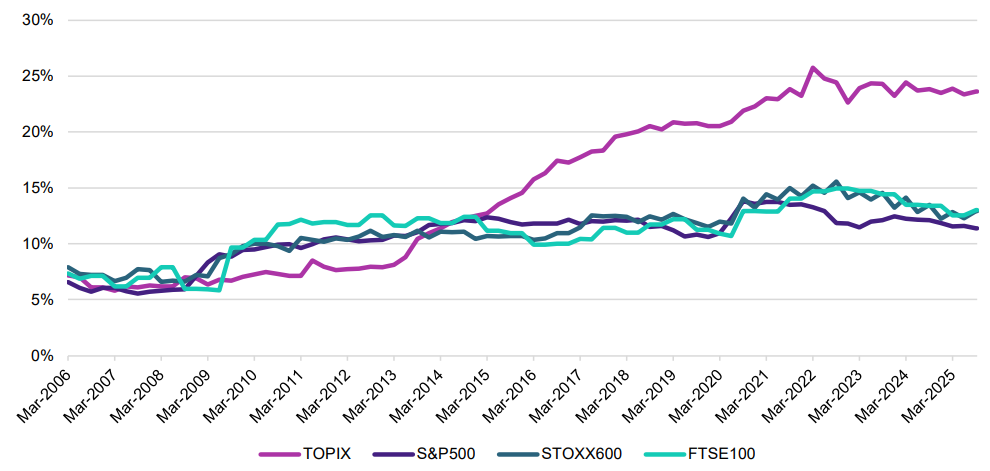
In Japan, the majority of companies listed on the prime market are net cash positive as the management teams have been quite conservative in their financial strategy. Hoarding cash over the years resulted in significant levels of cash sitting on their balance sheets (Chart 1).
Chart 1: Cash as a percentage of total assets
Source: Bloomberg as of 30 September 2025
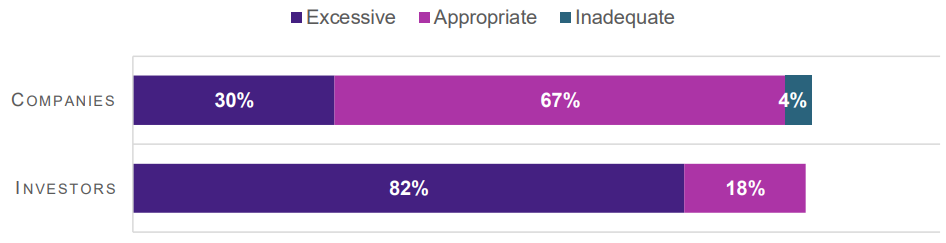
A survey conducted by the Life Insurance Association of Japan indicated that while 67% of companies consider their cash reserves to be at an appropriate level, 82% of investors view them as excessive, highlighting a persistent gap in perception between corporates and shareholders. It appears that there is still significantly more room for companies to improve their capital planning to boost capital efficiency.
Chart 2: For companies / investors: How do you see current levels of cash on hand?
Source: Initiatives by Life Insurers to Reinvigorate the Equity Market and Achieve a Sustainable Society through Asset Management, The Life Insurance Association of Japan
More scrutiny on capital allocation on the horizon
According to the Nikkei, the number of companies disclosing detailed capital allocation policies through July nearly doubled year-on-year, reaching 309. Companies have been more mindful of capital efficiency, especially after the Tokyo Stock Exchange’s guidance in March 2023, boosting shareholder distributions to deploy excess cash in recent years but there is more work to be done.
In June 2025, Japan’s Financial Services Agency (FSA) released a document titled “Action Programme for Corporate Governance Reform 2025” , which basically says that a decade after the launch of Japan’s Stewardship and Corporate Governance Codes (in 2014 and 2015 respectively), progress is evident. However, sustainable growth and long-term value creation at companies require more than compliance and that companies and investors must shift from box-ticking to active, strategic governance reform.
Within the document, the FSA specifically mentioned that “Consideration should also be given to clarifying the board’s accountability in verifying whether each company appropriately assesses its current resource allocation, such as whether it is effectively utilising cash for investments (in revising the Corporate Governance Code)”.
On 6 October, Bloomberg reported that “Cash-rich companies in Japan may feel the heat after the election win of the pro-stimulus conservative Sanae Takaichi, as she has in the past expressed concerns about excess corporate cash holdings”. Other political parties have also expressed concerns about the growing retained earnings at Japanese companies.
In game theory, a “dominant strategy” is one that yields a higher payoff than any other strategy, regardless of the choices made by other players. In a similar way, we believe that for cash-rich companies, irrespective of future political developments, whether immediate or long-term, utilizing excess cash will benefit them under different political scenarios, making mobilising cash a “dominant strategy”. Effective use of cash will enable companies to fend off shareholder activists or hostile suitors with higher valuations and less idle assets. Companies will also be able to avoid destroying shareholder value (i.e., avoid yielding real negative returns) amid ongoing inflation, which has now become the norm.
Conclusion
In Japan’s shifting corporate landscape, cash-rich companies are facing growing pressure. Years of conservative financial management have left many firms with large cash reserves, making them increasingly vulnerable to unsolicited bids and hostile takeovers. Investor sentiment contrasts sharply with corporate views—while most companies see their cash levels as appropriate, a majority of investors consider them excessive.
Regulatory bodies, including the FSA, are pushing for more strategic capital allocation. The recent acquisition of Shibaura Electronics by Taiwan’s Yageo underscores the intensifying competition for corporate control. As inflation persists and shareholder activism rises, deploying excess cash is becoming a “dominant strategy” for companies to enhance value and fend off threats. Regardless of how Japan’s political turmoil unfolds, there will be a growing focus on cash-rich companies, which are likely to mobilise their reserves to enhance value, defend against takeovers, and meet rising expectations for capital efficiency.
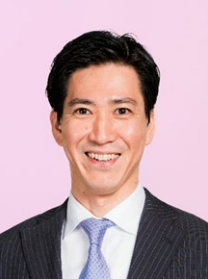
Junichi Takayama,
Japan Investment Director
About the author
Junichi Takayama acts as a direct conduit for the Tokyo-based Japan Equity team’s investment process, research, and insights to global clients.
Takayama joined Nikko Asset Management (now Amova Asset Management) in Tokyo as Investment Director in December 2013. He was assigned to continue these efforts from the firm’s London office in April 2023.
With over two decades of investment management industry experience in Japan and the United States, Takayama has a distinct East to West and West to East view of capital markets. He started his career at Daiwa Securities SMBC (now Daiwa Securities Group) as an investment banking analyst in Tokyo. He then moved to California to join Taiyo Pacific Partners, which manages a Japan-focused activist fund in partnership with CalPERS and WL Ross & Co. After four years there conducting bottom-up fundamental equity research and engaging with Japanese corporate managers, he moved back to Tokyo to join the US asset manager Principal Global Investors as a Japan Equity Analyst and later served as a Japan Equity Portfolio Manager.
Takayama earned his Bachelor of Arts in Economics from the University of Michigan, Ann Arbor and Master of Business Administration with Honors from the University of Chicago Booth School of Business. He is a holder of the right to use the Chartered Financial Analyst® (CFA), Chartered Alternative Investment Analyst℠ (CAIA) and Certified Member Analyst of the Securities Analysts Association of Japan (CMA) designations.
Any reference to a particular security is purely for illustrative purpose only and does not constitute a recommendation to buy, sell or hold any security. Nor should it be relied upon as financial advice in any way.